Define the symptom
Agree on the problem, affected loads, limits, time period and measurable performance indicators.
Diagnose unstable combustion, emissions and fuel-conversion problems with operating data, fuel properties, air distribution and practical engineering checks.
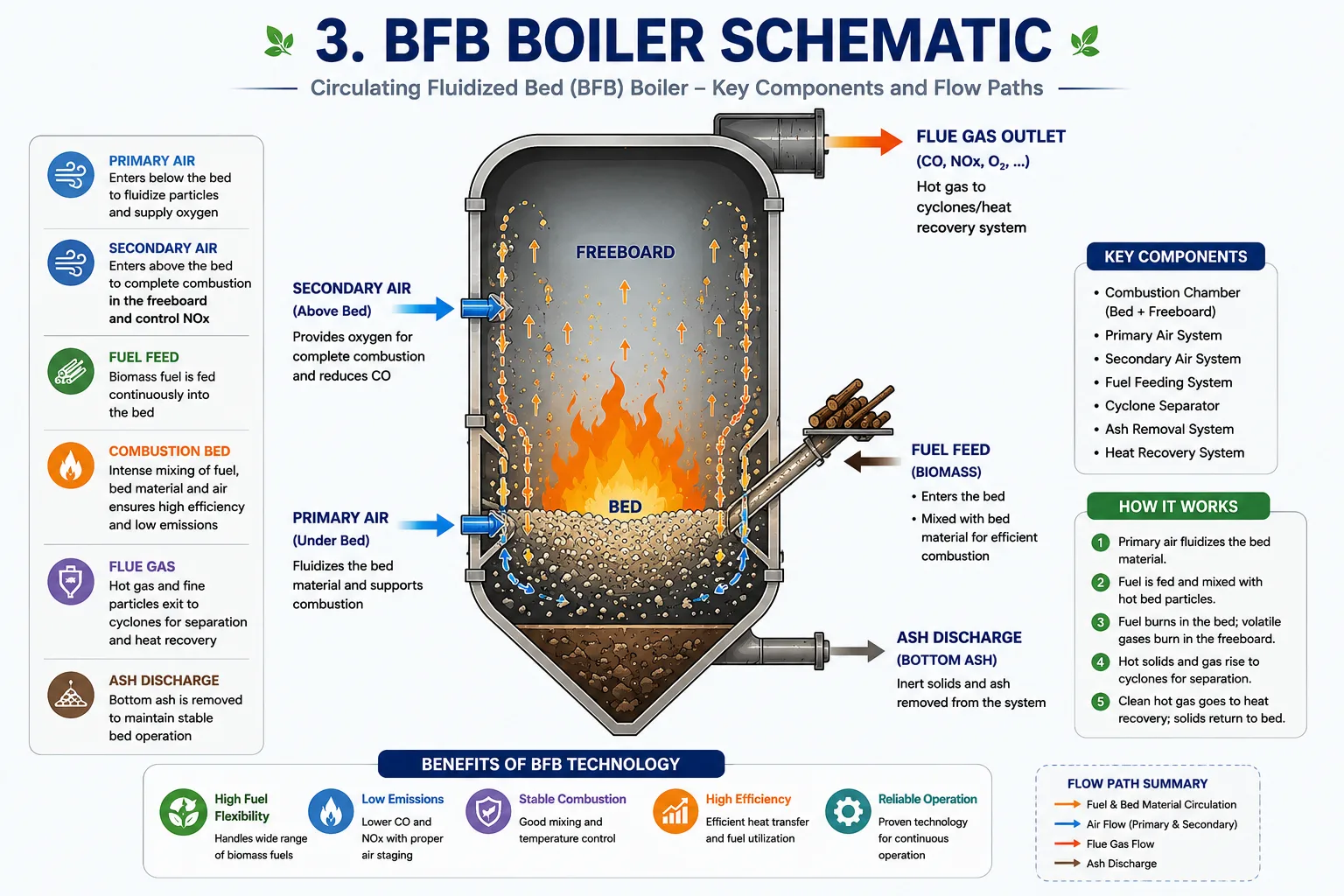
Combustion performance is treated as a connected system of fuel, air, temperature, mixing, residence time and equipment condition.
The workflow aligns operating trends, fuel data and equipment observations before recommending controlled tests or hardware modifications.
Agree on the problem, affected loads, limits, time period and measurable performance indicators.
Align CO, NOx, O2, temperature, load, fuel rate, air settings and pressure data.
Check moisture, nitrogen, volatile matter, ash, heating value, size distribution and consistency.
Review primary/secondary-air balance, leakage, distribution, deposits and mechanical condition.
Prioritize safe adjustments and record one variable change against a stable reference condition.
Document findings, operating window, limitations and measurements needed to confirm improvement.
These articles explain the mechanisms used to structure a plant investigation and connect operating symptoms to testable causes.
How nitrogen, moisture, volatile matter, ash and heating value influence BFB combustion and emissions.
Read the article →Why excessive fines and oversized biomass particles create different combustion and emission risks.
Read the article →A staged header and windbox study that reduced modeled outlet-flow variation in a fluidized-bed boiler.
Read the case study →Average stack O2 alone cannot show whether local zones are fuel-rich, oxygen-rich, too cold or poorly mixed. Recommendations therefore combine emissions with load, temperature, fuel behavior, air distribution and residence-time evidence.
If operating adjustments cannot correct a persistent distribution problem, a separate CFD scope can compare duct, header, windbox or air-port modifications before fabrication.
Share the operating trends, fuel information, equipment arrangement and when the problem began. CADBoostPro can review the available evidence and propose a focused investigation scope.
Discuss your combustion problem →Provide one stable period before the problem and one representative problem period at similar load, using the same emissions reference basis where possible.